

Drywall Mold Removal in Vancouver, WA
Vancouver's year-round humidity levels create conditions where drywall becomes particularly susceptible to mold growth, even during months when outdoor moisture seems less obvious. Homes throughout the area—from established neighborhoods near the river to communities like Hazel Dell and Salmon Creek—often develop mold within wall cavities and on drywall surfaces where ventilation is limited, making professional removal essential to prevent the problem from spreading deeper into framing. Bennett Mold Remediation connects you with local providers who specialize in drywall mold removal, ensuring affected material is safely contained and removed to restore your home's integrity and indoor air quality.
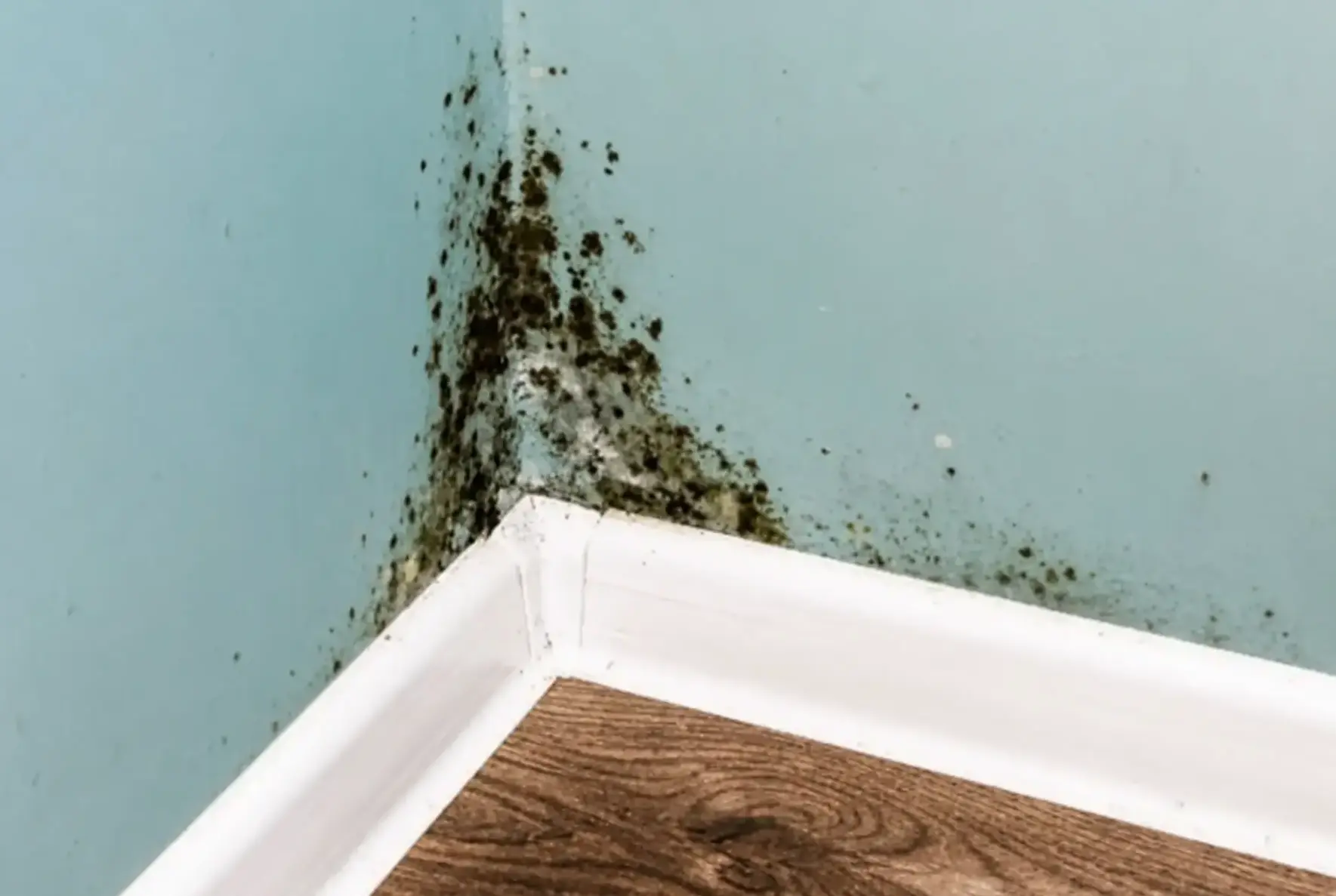
What gets cleaned in a wall cavity, and what comes out
The honest answer to “does this come out, or can it be cleaned?” turns on two things — what the material is, and how many square feet are affected. Those are the two axes of the EPA’s own remediation table, reproduced below for the materials usually found in a wall cavity.
| Material | Under 10 sq ftabout a cabinet door, or one ceiling tile | 10 to 100 sq ftroughly one wall, or a small bathroom | Over 100 sq ftmore than one room's worth of surface |
|---|---|---|---|
| Wallboardthe wallboard itself, both facesEPA, Table 2 | HEPA vacuum | HEPA vacuumRemove and discard | HEPA vacuumRemove and discard |
| Wood surfacesstuds, plates and sheathing behind itEPA, Table 2 | Wet vacuumDamp wipeHEPA vacuum | Wet vacuumDamp wipeHEPA vacuum | Wet vacuumDamp wipeHEPA vacuumRemove and discard |
What those methods mean, in EPA's words
- Wet vacuum
Wet vacuums are vacuum cleaners designed to collect water. They can be used to remove water from floors, carpets and hard surfaces where water has accumulated.
EPA, cleanup methods- Damp wipe
Mold can generally be removed from nonporous (hard) surfaces by wiping or scrubbing with water, or water and detergent.
EPA, cleanup methods- HEPA vacuum
HEPA (High-Efficiency Particulate Air) vacuums are recommended for final cleanup of remediation areas after materials have been thoroughly dried and contaminated materials removed.
EPA, cleanup methods- Remove and discard
Building materials and furnishings that are contaminated with mold growth and are not salvageable should be double-bagged using 6-mil polyethylene sheeting.
EPA, cleanup methods
Removed and replaced, whatever the area
- Fiberglass or other insulation — batt or blown insulation in the stud bay.
Fiber glass, or any other insulation material that is wet or visibly moldy (or if an unacceptable odor is present) should be removed and replaced by a qualified heating and cooling system contractor.
EPA, air duct cleaningEPA states this in its heating-and-cooling guidance and it is quoted here as written. Its water-damage table reaches the same conclusion for both fiberglass and cellulose insulation.
These guidelines are for damage caused by clean water. If you know or suspect that the water source is contaminated with sewage, or chemical or biological pollutants, then Personal Protective Equipment and containment are required by OSHA.
EPA, Table 1Porous materials that are wet and have mold growing on them may have to be discarded.
EPA, cleanup methodsMold can grow on wood, drywall, carpet and furniture if they remain wet for more than 24 hours.
EPA, flood cleanup
What shows on the painted face is usually smaller than what is inside the cavity, because the paper facing and the stud bay stay wet long after the surface looks dry. That is why the area measured on the wall and the area actually remediated are rarely the same number. The studs behind are often salvageable even when the board is not.
Vancouver's housing splits roughly 15.1% before 1960 and 12.4% from 2010 on — two very different sets of problems.Source: US Census Bureau, American Community Survey 2023 5-year estimates, table B25034 — Vancouver city (83,450 housing units)
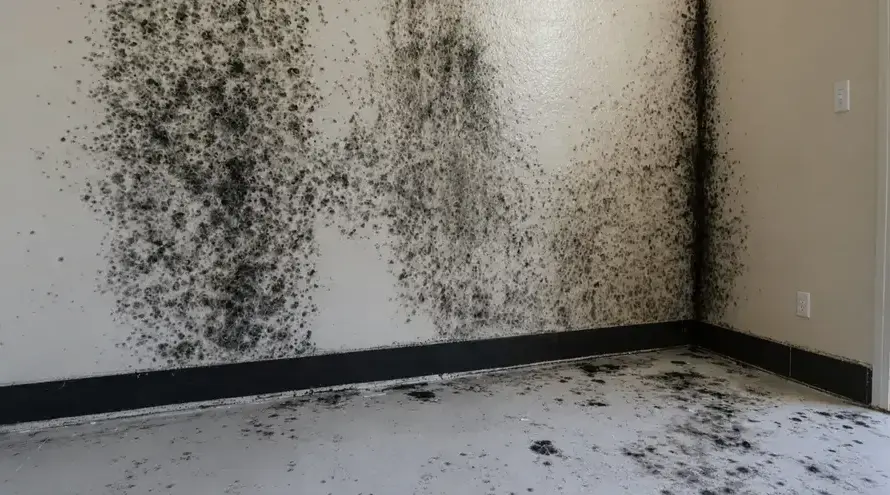
Drywall Mold Removal Solutions for Vancouver, WA Homes
Vancouver's marine west coast climate creates year-round moisture conditions that present a persistent challenge for property owners. High relative humidity persists throughout the seasons, keeping indoor moisture levels elevated even during drier months. Many older homes in established Vancouver neighborhoods, particularly those with vented crawl spaces, struggle with moisture accumulation in these poorly ventilated areas—a primary driver of mold growth that often spreads into structural materials and wall cavities. When drywall becomes affected, the problem extends beyond surface appearance; mold in wall framing and drywall compromises indoor air quality and requires prompt, thorough intervention to prevent further deterioration.
Bennett Mold Remediation connects Vancouver property owners with independent local providers who specialize in drywall mold removal, addressing contamination with targeted containment, careful removal, and proper drying to restore wall integrity and air quality. The providers in the network focus on identifying moisture sources, removing affected drywall safely, and ensuring adequate ventilation to discourage recurrence. Once removal is complete, follow-up guidance helps property owners maintain conditions that keep drywall and crawl spaces dry. If you've spotted discoloration, soft spots, or musty odors in your walls, connecting with a local drywall mold removal provider through Bennett Mold Remediation is a straightforward first step toward healthier indoor spaces.
Why Vancouver Property Owners Choose Bennett Mold Remediation
Fast Drywall Mold Removal Response
When drywall mold is discovered, quick action prevents spread and further damage. Bennett connects you with local providers who respond promptly to Vancouver-area requests, minimizing the window for mold to advance through wall cavities and framing.
Thorough Drywall Mold Treatment
Drywall mold removal requires identifying moisture sources and affected areas behind surfaces. The independent providers in Bennett's network take a complete approach—addressing root causes and removing compromised sections—rather than cosmetic surface fixes alone.
Clear Communication Throughout Removal
Understanding what drywall mold removal involves and why it's necessary builds confidence. Providers connected through Bennett explain findings, treatment steps, and preventive measures in plain language so you know what to expect.
Drywall Mold Solutions for High-Humidity Homes
Vancouver's consistently elevated indoor humidity—even during drier months—creates persistent conditions for drywall mold growth. Poor ventilation in crawl spaces, common in older homes throughout the area, compounds moisture retention. Bennett's network providers understand how to address drywall mold in environments where humidity control is essential.
How Our Drywall Mold Removal Process Works
Schedule Your Drywall Mold Removal Visit
Contact Bennett Mold Remediation to describe drywall mold you've noticed in your Vancouver home or business. We connect you with a local independent provider who will schedule a time to inspect the affected drywall and assess the extent of mold growth.
Get a Drywall Mold Inspection & Plan
The provider examines your drywall, identifies moisture sources—common in homes here where high indoor humidity persists year-round—and determines whether drywall can be treated or must be removed and replaced. You'll receive a clear plan for safe drywall mold removal tailored to your property.
Complete Drywall Mold Removal & Verification
The independent provider removes affected drywall sections, addresses underlying moisture issues, and installs new materials. Follow-up checks confirm the drywall mold removal is complete and moisture levels are stable to help prevent recurrence.
Dealing with Drywall Mold Removal in Vancouver? Get fast, professional help.
Call Now — (360) 997-5574Drywall Mold Removal Across Vancouver
Vancouver's marine west coast climate creates persistently elevated indoor moisture levels throughout the year, a condition that makes drywall particularly vulnerable to mold colonization. Unlike materials that dry quickly after exposure to moisture, drywall's porous gypsum core absorbs water and retains it—ideal conditions for mold spores to germinate and spread. In established neighborhoods near the river and throughout older homes in areas like Hazel Dell and Salmon Creek, vented crawl spaces with limited air circulation compound this moisture problem, allowing humid air to rise through floor cavities and into wall cavities where drywall is situated. This combination of year-round humidity and structural design means drywall mold removal often requires more than surface cleaning; it demands thorough inspection to identify how far mold has penetrated and professional containment to prevent spore dispersal during removal.
When drywall mold develops, the affected sections typically cannot be salvaged and must be removed, replaced, or sealed by independent remediation providers who understand Vancouver's moisture profile. Bennett Mold Remediation connects property owners with local providers experienced in removing compromised drywall while maintaining indoor air quality and preventing cross-contamination. Because moisture control and proper ventilation are critical to preventing recurrence, the providers in our network approach drywall mold removal as part of a broader moisture-management strategy tailored to your home's specific conditions and location.
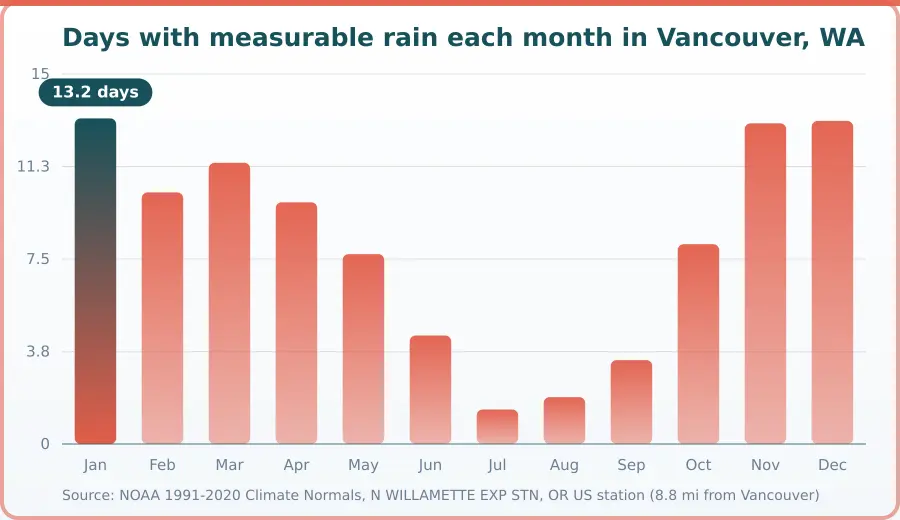
| Period | Days with measurable rain by month (days) |
|---|---|
| Jan | 13.2 |
| Feb | 10.2 |
| Mar | 11.4 |
| Apr | 9.8 |
| May | 7.7 |
| Jun | 4.4 |
| Jul | 1.4 |
| Aug | 1.9 |
| Sep | 3.4 |
| Oct | 8.1 |
| Nov | 13 |
| Dec | 13.1 |
Source: NOAA 1991-2020 Climate Normals, N WILLAMETTE EXP STN, OR US station (8.8 mi from Vancouver). Retrieved October 5, 2026.
Seasonal Drywall Mold Removal in Vancouver, WA
Spring: Awakening Moisture
Spring thaw and increased rainfall create moisture pathways into walls and drywall cavities. Bennett Mold Remediation connects you with local providers who identify early mold colonization on drywall before it spreads, using targeted inspection and safe removal to protect indoor air quality.
Summer: Heat and Humidity
Summer warmth combined with elevated indoor humidity accelerates drywall mold growth in poorly ventilated spaces, particularly in vented crawl spaces common to older Vancouver-area homes where moisture rises into wall cavities and studs. Bennett's network helps you find providers experienced in addressing drywall mold tied to these persistent moisture conditions.
Fall: Condensation Risk
Cooler nights and temperature swings cause condensation to form on cool interior drywall surfaces, while outdoor moisture increases. Bennett Mold Remediation connects you with local specialists who remove active drywall mold and advise on moisture control to prevent recolonization as seasons shift.
Winter: Active Growth Period
Cold weather drives moisture indoors; heating systems can dry air unevenly, creating pockets where drywall stays damp enough for mold to thrive. Bennett links you with providers trained to locate and safely remove drywall mold during winter, when indoor confinement makes air quality especially important.
Drywall Mold Removal FAQs — Vancouver, WA
Drywall mold removal involves identifying affected areas, containing spores, and removing the contaminated drywall sections. The independent local providers Bennett connects to will assess moisture sources, remove moldy material safely, and help restore your wall integrity. The scope depends on how deep mold has penetrated and whether studs or insulation behind the drywall also need attention.
Bennett Mold Remediation matches Vancouver property owners with independent local providers who can respond to your situation. Contact Bennett with details about your drywall mold concern, and we'll connect you with a nearby provider who can schedule an inspection and discuss your timeline for removal.
Drywall mold removal costs depend on the affected area's size, how many drywall sections need removal, whether mold extends into framing or insulation, and your home's layout. The independent provider will assess these factors during inspection and discuss pricing with you directly. Bennett connects you with local providers; each sets their own rates.
Before removal begins, clear personal items and furniture away from the work area. The independent provider will discuss containment steps to protect other parts of your home from dust and spores. You may need to stay elsewhere during active removal, depending on the scope—ask your provider about precautions and timeline expectations.
After removal, identify and fix the moisture source—whether it's a roof leak, plumbing issue, or indoor humidity. Maintain proper ventilation, repair any water damage promptly, and monitor humidity levels indoors. The provider can advise on moisture control after removal is complete.
Vancouver's consistently elevated indoor moisture levels year-round create ideal conditions for mold growth on drywall, even outside wet seasons. Many established homes in neighborhoods like Hazel Dell and Salmon Creek have vented crawl spaces with ventilation challenges that allow moisture to rise into living spaces. This persistent dampness makes drywall a common moisture target, especially on interior walls and around foundations.
Related Services
Homeowner Safety Toolkit
Verify Your Vancouver, WA Mold Remediation Company
Before you hire anyone, use these independent national resources to confirm credentials, standards, and track record.
EPA
The federal government's own guidance on identifying, cleaning up, and preventing mold growth in a home.
Mold Prevention GuideACAC
An independently accredited certifying body for mold inspectors and consultants — one of the few in this field whose standards are verified by an outside accreditation board, not just self-declared.
Find a Certified InspectorIICRC
Publishes the S520 standard for professional mold remediation. Confirm a company's technicians hold real, current IICRC certification before you hire them.
Verify CertificationDealing with Drywall Mold Removal in Vancouver, WA? Call (360) 997-5574 for 24/7 help.
Call Now — (360) 997-5574Areas We Serve in Vancouver, Washington
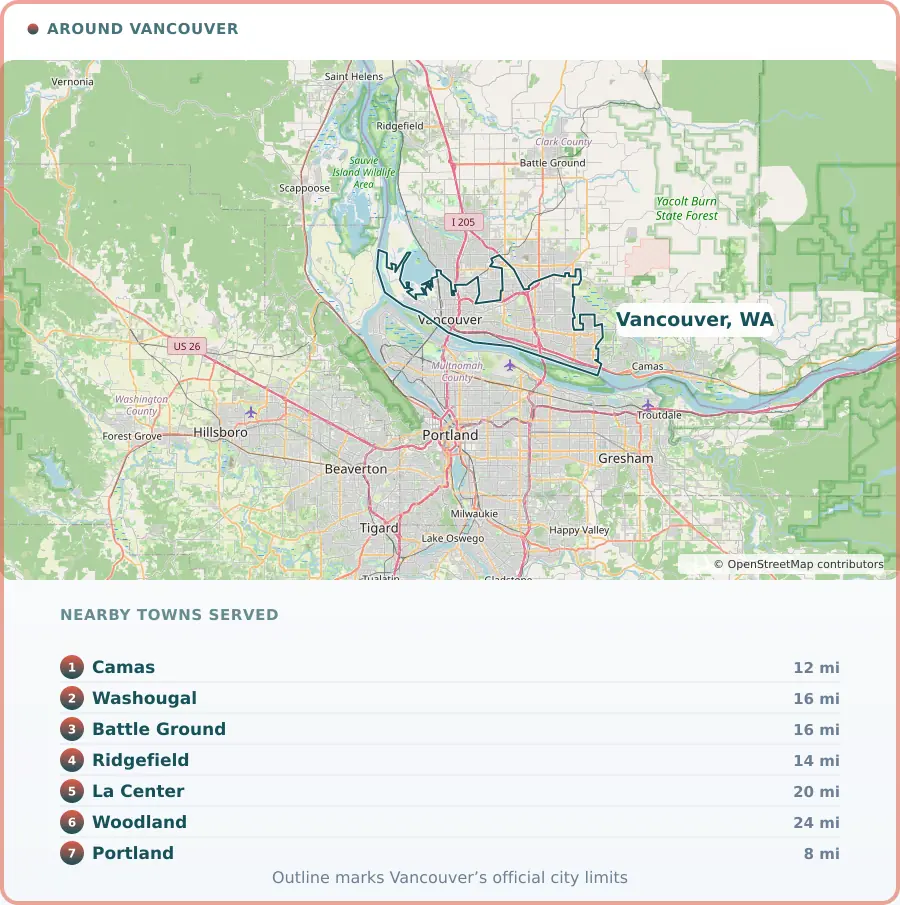
Coverage centres on Vancouver, WA and reaches 7 surrounding communities. Response time is what matters most in the hours after a problem is found, so knowing the ground is part of the job.
Vancouver, WA Information
Sitting just across the Columbia River from Portland, Oregon, Vancouver, WA has grown into a city of roughly 194,000 with an identity very much its own. Healthcare keeps the local economy steady, with PeaceHealth Southwest Medical Center and Legacy Salmon Creek Medical Center among the region's largest employers, while semiconductor and electronics manufacturers like SEH America and Sharp Microelectronics add industrial depth alongside familiar names such as Nautilus and Columbia Machine.
Clark County's lack of a state income tax keeps pulling new residents and businesses across the river, fueling steady growth in retail, logistics, and professional services. From the walkable charm of Esther Short to the family-friendly stretches of Cascade Park and Salmon Creek, Vancouver balances small-city warmth with big regional opportunity.
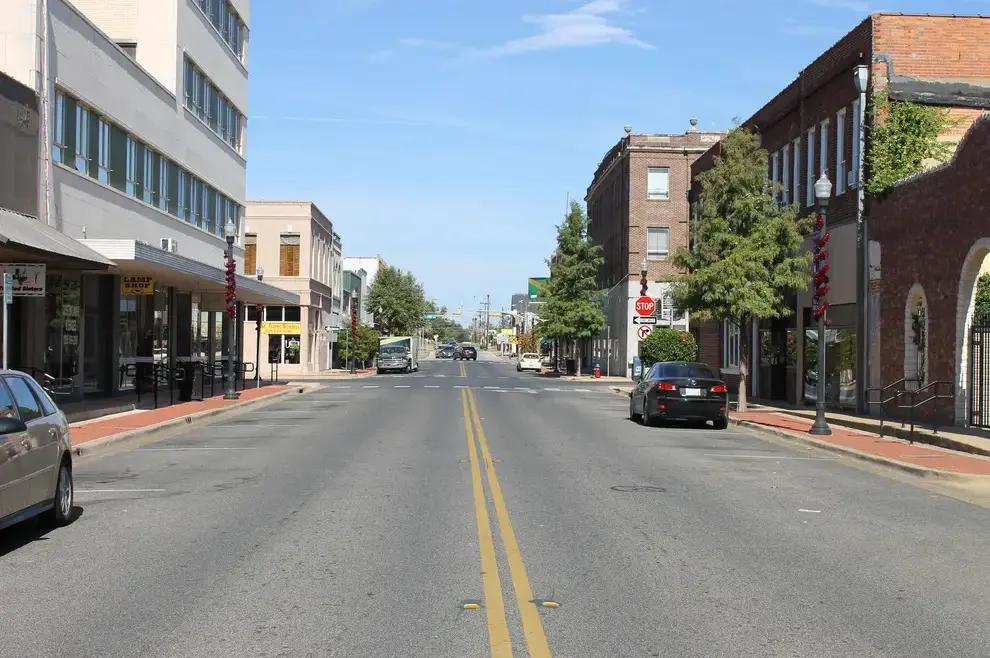
Photo: Billy Hathorn, CC BY-SA 3.0